Understanding sauerkraut’s deep-rooted history and its remarkable simplicity in preparation equips individuals with the tools for self-sufficient, health-conscious food preservation. The process of fermentation transforms humble cabbage into a probiotic-rich, flavorful food capable of elevating countless dishes. This guide details the uncomplicated method to craft sauerkraut using just a jar, introducing newcomers to lacto-fermentation—a time-tested preservation technique that supports digestive health and encourages frugal, sustainable living.
In short, sauerkraut requires only two ingredients—fresh cabbage and sea salt—and minimal equipment, primarily a glass jar. The fermentation depends on naturally occurring Lactobacillus bacteria that convert the sugars in cabbage into lactic acid, preserving and flavoring the product without preservatives or artificial additives. This approach heralds a practical step towards independence from commercial food sources and a way to engage in DIY food preservation that enhances nutritional intake cost-effectively.
- Essential ingredients: fresh green cabbage and non-iodized sea salt
- Simple equipment: a quart-sized mason jar, mixing bowl, zip-top freezer bag or glass weight, knife, and cutting board
- Fermentation timeframe: typically 7 to 14 days at controlled room temperature
- Health benefits: improves gut microbiota with probiotics, rich in fiber and vitamins
- Preservation methodology: using natural brining to create anaerobic conditions for safe fermentation
Mastering the fundamentals of sauerkraut fermentation in a jar
Creating sauerkraut involves the natural fermentation of cabbage under salt-induced brine conditions, which relies on the activity of beneficial microbes, primarily Lactobacillus species. These bacteria thrive when the cabbage is submerged beneath its brine, converting sugars into lactic acid, the primary agent behind sauerkraut’s signature tang and preservation.
The biological mechanisms begin at the surface of fresh cabbage, which carries the resident microbiota required for fermentation without needing any added starter cultures. The crucial step involves massaging the salt into thinly sliced cabbage until enough liquid is released to cover the solids completely. This brine inhibits spoilage organisms and fosters an anaerobic environment.
The role of salt here is twofold: it draws water from the cabbage cells to form the brine and controls the microbial population by favoring acid-tolerant bacteria while suppressing pathogens. Adhering to a proper salt-to-cabbage ratio is essential; too little salt leads to spoilage, too much slows fermentation.
During fermentation, the increase in acidity preserves the vegetable while enriching its nutritional profile, including vitamin C and B vitamins. The duration depends on ambient temperature—warmer settings hasten fermentation but require vigilance for mold or off-odors. With attention to detail, the outcome is a crunchy, tart, probiotic food that retains beneficial enzymes often lost in cooked or processed counterparts.
The mason jar is optimal for several reasons: its transparency allows observation of progress, its airtight lid can be modified for gas release during fermentation, and its size supports manageable batch production for beginners. The jar-based fermentation method offers not only convenience but also precise control necessary to develop the appropriate acidity and flavor.
Selecting quality cabbage and essential equipment for DIY sauerkraut
In-depth understanding of ingredient selection yields superior homemade sauerkraut. Freshness and quality of cabbage directly influence texture and flavor. It is advisable to choose cabbage heads that feel heavy for their size, with firm, unblemished, and crisp leaves. Green cabbage is traditional; however, red cabbage varieties may be used to introduce visual appeal and anthocyanin antioxidants.
Salt selection is equally critical. Non-iodized sea salt, kosher salt, or specifically pickling salts should be used to avoid antimicrobial agents that inhibit beneficial bacteria. Iodized salts commonly found in regular table salt can disrupt fermentation.
The tools required embody simplicity and resourcefulness. A sharp chef’s knife facilitates clean slicing, ensuring even cabbage shreds that ferment uniformly. The cutting board provides a stable work surface, and a sizable mixing bowl allows thorough massaging of the cabbage with salt.
The fermentation vessel of choice is typically a 1-quart wide-mouth glass jar, fulfilling the dual purpose of capacity and visibility. Weighing down the cabbage during fermentation to ensure complete brine submersion is achieved either with a water-filled zip-top freezer bag or a ceramic/glass fermenting weight. The lid should be loosely applied or fitted with an airlock to release fermentation gases while preventing oxygen entry.
Understanding that expensive equipment is unnecessary encourages wider adoption of this technique. Beginners can source inexpensive jars and repurpose household items as weights, fostering an accessible approach to sustainable food production.
| Equipment | Purpose | Notes |
|---|---|---|
| Sharp chef’s knife | Slicing cabbage evenly | Improves texture and fermentation uniformity |
| Wide-mouth glass jar (1 quart) | Fermentation vessel | Allows monitoring and fermenting manageable batches |
| Large mixing bowl | Salting and massaging cabbage | Ensures even salt distribution and brine formation |
| Zip-top freezer bag or fermenting weight | Weigh down cabbage under brine | Ensures anaerobic fermentation environment |
| Lid (two-piece band or airlock) | Seals jar while allowing gas escape | Prevents spoilage and mess |
Step-by-step approach to preparing and fermenting sauerkraut in a jar
The method to produce homemade sauerkraut starts by preparing the cabbage. After removing the outer wilted leaves, rinse the cabbage under cool water, then quarter it and remove the core. Thinly slice the quarters to approximately 1/8 inch thickness for optimal texture.
Place the sliced cabbage in a large bowl and sprinkle with an initial teaspoon of sea salt. Massage the cabbage thoroughly with hands for several minutes until the leaves soften and begin to release liquid. The goal is to produce a briny solution that will cover the cabbage once packed.
If sufficient liquid does not emerge through massaging, covering the bowl and letting it rest for 30–45 minutes will further draw out moisture. Post-resting, massage again to ensure enough brine is available. This brining step initiates the environment required for lacto-fermentation.
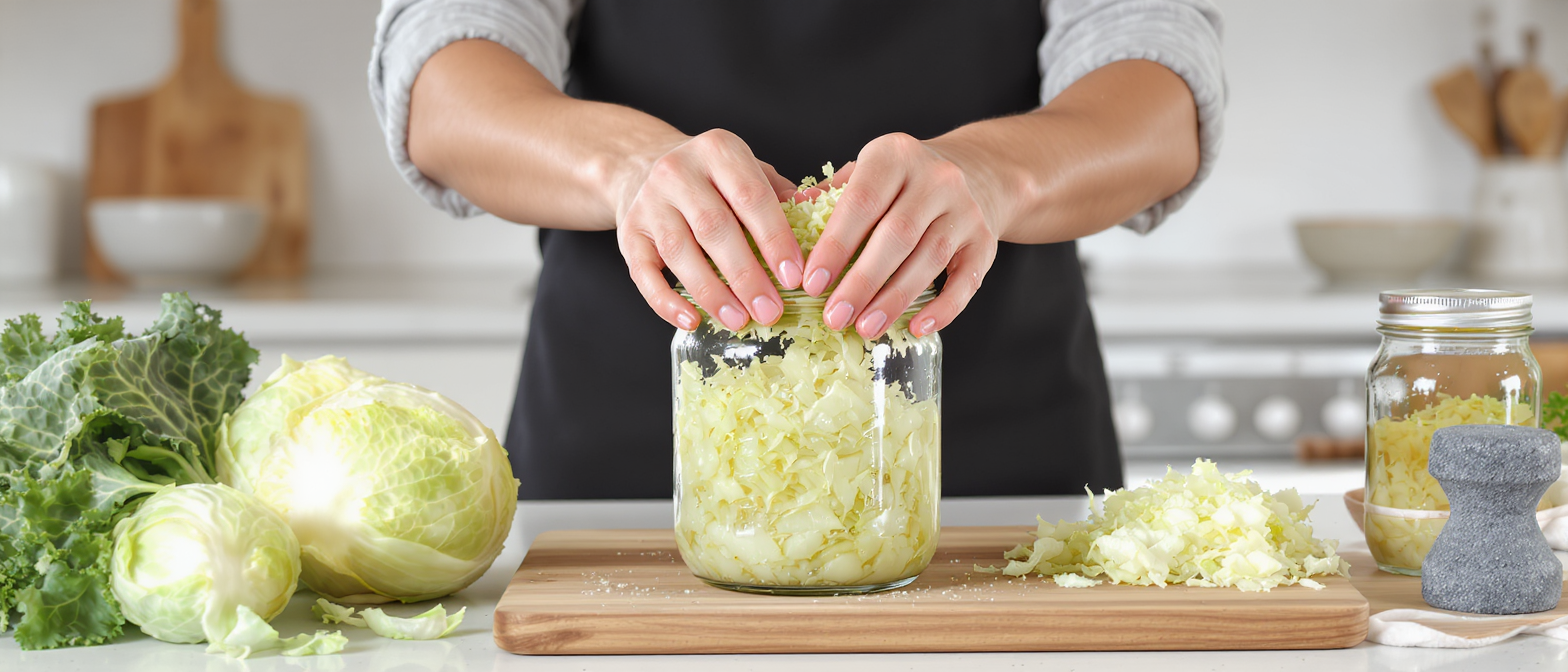
Next, pack the salted cabbage tightly into a clean quart-sized jar, pressing down firmly to expel air and compact the cabbage. Leave 2 to 3 inches of headspace at the top to allow gases from fermentation to collect. Pour remaining brine from the bowl on top to ensure full submersion.
Tuck one or two reserved outer cabbage leaves onto the surface to protect against floating bits, which are more vulnerable to mold. Weigh the cabbage under the brine by inserting a water-filled zip-top freezer bag or a glass weight. Seal the jar loosely to allow gas to escape or use a fitted airlock.
Store the jar in a cool, dark place between 55°F and 75°F, out of direct sunlight. Fermentation generally lasts from 7 to 14 days depending on temperature and desired sourness. Bubbles forming at the surface and cloudy brine indicate active fermentation. Daily inspection to ensure the cabbage remains submerged and to release excess gas prevents spoilage.
After a minimum of four days, begin tasting the sauerkraut to monitor flavor development. It should be pleasantly tart, mildly salty without vinegar sharpness, and retain a satisfying crunch. If needed, allow fermentation to continue up to two weeks, periodically pressing the cabbage and checking for surface mold, which should be removed immediately to prevent contamination.
Economic and health advantages of fermenting sauerkraut at home
Homemade sauerkraut not only promotes autonomy and frugality but also enriches the diet with vital nutrients and probiotics. The economic benefits arise as a basic batch costs approximately $5 in raw ingredients—less than the $7 to $10 price point for equivalent store-bought versions. This affordability aligns with strategies for sustainable living and food independence, particularly valuable during supply chain disruptions or economic uncertainty.
From a nutritional perspective, lacto-fermented sauerkraut delivers a natural source of probiotics, which support gastrointestinal health by maintaining a balanced microbiome. These live bacteria aid digestion, enhance nutrient absorption, and potentially strengthen the immune response. Additionally, homemade sauerkraut provides fiber, vitamin C, B vitamins, calcium, potassium, and lactic acid, components beneficial for overall wellness.
Regular consumption of fermented foods like sauerkraut aligns with emerging science on gut health and chronic disease prevention, making it a strategic addition to one’s diet. However, gradual introduction is advisable, starting with small servings to allow the digestive system to adapt to increased probiotics and fiber. For those with sensitive digestion, starting with sauerkraut brine in minimal quantities can facilitate tolerance development.
Moreover, mastering fermentations like sauerkraut in a jar cultivates skills transferable to other homemade preserved foods such as kimchi, pickles, and yogurt. The knowledge to leverage natural microbial processes to convert perishable produce into shelf-stable, healthful foods represents a practical and scalable empowerment.
Extending sauerkraut creativity: recipe variations and troubleshooting tips
After mastering the basic sauerkraut recipe, fermentation enthusiasts can experiment with flavor enhancer additives such as caraway seeds, juniper berries, garlic, or colorful vegetables like beets and red cabbage. These additions not only diversify taste profiles but introduce additional dietary antioxidants and bioactive compounds, contributing to a richer nutritional spectrum.
Common challenges include managing surface mold, which typically appears as white or fuzzy growth. This is often harmless if promptly removed and the submerged cabbage remains unaffected. Should any off-smells or discoloration occur, discarding the batch and sterilizing all equipment is recommended.
To maintain optimal fermentation:
- Always keep cabbage fully submerged. Exposure to oxygen can invite spoilage.
- Use clean tools and jars to prevent unwanted microbial contamination.
- Monitor temperature. Ideal ranges are between 60°F and 75°F; cooler temperatures slow fermentation, warmer ones speed it excessively.
- “Burp” the jars daily if not using airlocks, releasing built-up carbon dioxide that can otherwise cause container rupture.
| Problem | Potential Cause | Recommended Action |
|---|---|---|
| Surface mold presence | Oxygen exposure, floating cabbage bits | Remove mold, discard affected leaves, reseal with weight |
| No brine release | Insufficient massaging or salting | Massage cabbage longer, add minimal salt, allow resting time |
| Excessive saltiness | Too much salt added | Use accurate measurements, dilute with fresh cabbage in next batch |
| Overly sour or soft kraut | Excess fermentation time or warm conditions | Refrigerate sooner, reduce fermentation time |
These practical strategies safeguard against common pitfalls and ensure a consistently successful homemade lacto-fermented sauerkraut that complements a variety of meals with healthful benefits.
Can sauerkraut be eaten raw or should it be cooked?
Sauerkraut can be enjoyed both raw and cooked. Raw sauerkraut retains more probiotic benefits while cooking may reduce them. Both options offer delicious tastes depending on personal preference.
How long can homemade sauerkraut be stored after fermentation?
Once fermented to taste and refrigerated, sauerkraut can be stored safely for up to six months, during which its flavor continues to develop while remaining crisp.
Is it necessary to use specialized fermentation equipment?
No specialized tools are necessary. A clean jar, salt, and cabbage suffice for successful fermentation. Weighing tools and airlocks may enhance convenience but are optional.
What are the benefits of eating sauerkraut regularly?
Regular consumption supplies probiotics critical for gut health, supports digestion, and introduces valuable nutrients such as fiber and vitamins C and B.
How do I know when my sauerkraut is ready to eat?
Taste your ferment starting after seven days. It should be pleasantly sour, mildly salty, and retain a slight crunch. Fermentation can proceed up to four weeks depending on desired tanginess.