Content
- 1 Optimal techniques for making homemade bread crumbs from leftover bread
- 2 Versatile culinary applications for homemade bread crumbs in cooking
- 3 Effective storage and preservation strategies to extend shelf life of homemade bread crumbs
- 4 Pragmatic insights on integrating homemade bread crumbs into sustainable cooking practices
- 4.1 What type of bread is best for making homemade bread crumbs?
- 4.2 Is it necessary to remove the crust before making bread crumbs?
- 4.3 How can bread crumbs be made without a food processor?
- 4.4 What are the best ways to store homemade bread crumbs?
- 4.5 Can homemade bread crumbs replace store-bought panko?
Turning leftover bread into homemade bread crumbs epitomizes an intelligent, sustainable strategy to reduce food waste while enhancing culinary creativity. In an era where resourcefulness defines resilience, reprocessing day-old or stale bread into versatile bread crumbs grants kitchens an economical and eco-friendly edge. Homemade bread crumbs serve as indispensable components in a multitude of dishes, from coating proteins to elevating texture in casseroles or pasta. The methodology capitalizes on simple kitchen tools and techniques, proving that sustainability and efficiency can harmonize effectively in everyday cooking.
Homemade bread crumbs provide more than a solution to surplus bread; they align with an overarching philosophy of autonomy by enabling households to maximize their pantry resources. This approach lessens dependence on processed, store-bought versions laden with preservatives and often high in sodium. Through applying straightforward steps—such as drying bread cubes, pulsing them in a food processor, and toasting—the result is customizable crumbs with controlled texture and flavor profiles. Moreover, storing homemade crumbs extends shelf life, fostering a culture of preparedness essential for kitchen stability in uncertain times.
The intersection of DIY culinary techniques and sustainability engrains homemade bread crumbs firmly within modern kitchen tips. As food waste accounts for a significant portion of global environmental concerns, transforming leftover bread addresses this problem pragmatically. It symbolizes a shift towards proactive food management rather than reactive disposal. Seasoned or plain homemade crumbs adapt effortlessly, enhancing dishes from breaded chicken cutlets to crunchy pasta toppings, thus showing the impressive range these crumbs unlock when treated as more than just waste byproducts.
In the continuum of cooking practices aimed at frugality and efficacy, the humble bread crumb emerges as a linchpin. Its production from leftover bread speaks to the larger narrative of food cycle optimization, where waste is minimized by reinvention. This paradigm not only conserves resources but contributes to an empowered, durable lifestyle. Accordingly, mastering bread crumb creation supports a mindset where every ingredient’s potential is extracted fully, a principle advantageous well beyond the kitchen.
Overall, the process and applications of homemade bread crumbs reveal critical insights into how ordinary households can integrate sustainability with culinary excellence. By adapting these practices, food enthusiasts can foster independence and achieve greater control over their food quality, nurturing both health and environmental responsibility simultaneously.
- Homemade bread crumbs minimize food waste by repurposing stale or leftover bread.
- Customizable texture and seasoning allow for tailored culinary applications from fine coatings to coarse toppings.
- Simple preparation techniques using common kitchen equipment maximize user accessibility.
- Storage methods extend breadcrumb shelf life, promoting preparedness and resourcefulness.
- Sustainability efforts enhance household independence and reduce reliance on processed products.
Optimal techniques for making homemade bread crumbs from leftover bread
Crafting high-quality homemade bread crumbs involves applying methodical yet accessible techniques to transform leftover bread into a versatile ingredient. The first crucial step entails selecting bread that is stale or partially dried but not excessively hardened. Bread nearing staleness contains reduced moisture content, facilitating efficient grinding and toasting. If bread is still fresh, a practical method involves cutting it into bite-size pieces and drying it in a low-heat oven—typically at 325°F (about 160°C) for 20 minutes—to expedite moisture removal while preserving structural integrity.
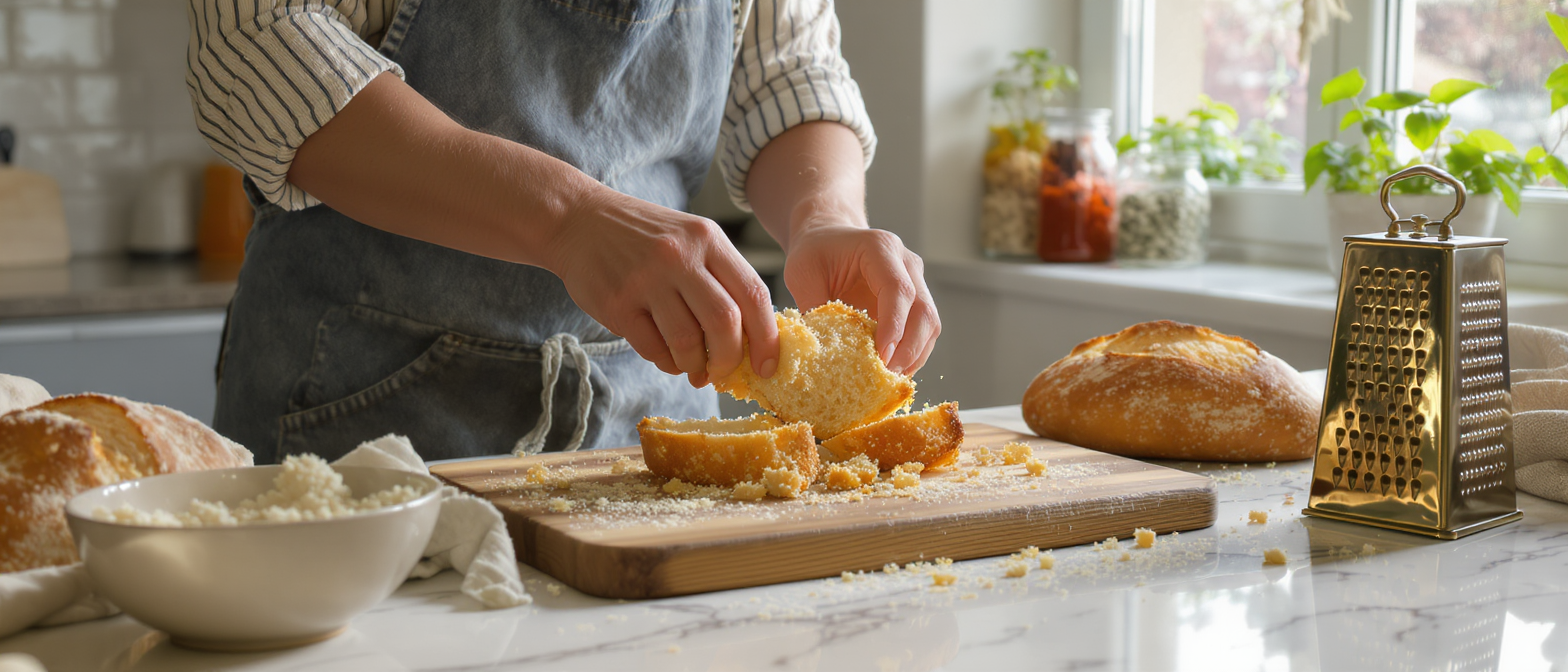
Once the bread has reached the appropriate dryness, it should be torn or cut into manageable chunks. Utilizing a food processor equipped with a metal blade best accomplishes the subsequent pulsing phase, critical for controlling crumb size. Pulsing in short bursts avoids turning crumbs into dust, allowing operators to achieve textures ranging from coarse to fine according to recipe requirements. A noteworthy point is that more dried bread results in finer crumbs, a useful feature when a delicate coating is needed.
The crust, often discarded unnecessarily, plays a pivotal role in flavor and texture enhancement. Including the crust imparts characteristic golden crunch and deeper, toasted notes that contribute complexity to dishes. Care should be taken, however, when dealing with extremely hard crusts—they should be cut smaller to mitigate risk of overloading food processor blades.
For those lacking a food processor, alternative approaches include grinding bread in a blender or crushing dried bread manually within a sealed plastic bag using a rolling pin or mallet. Manual crushing, while labor-intensive, offers a low-tech fallback to avoid food waste creatively. To ensure crumbs dry thoroughly for this method, the oven-drying step gains additional importance.
Seasoning bread crumbs post-preparation can amplify their utility, shifting plain crumbs into seasoned varieties ideal for specific recipes. Italian seasoning blends comprising parsley, basil, oregano, garlic powder, and marjoram typically elevate flavour profiles. Mixing in these dried herbs along with salt provides a ready-to-use breadcrumb blend that complements dishes like chicken parmesan or meatballs.
Versatile culinary applications for homemade bread crumbs in cooking
Homemade bread crumbs are fundamental in various cooking techniques, particularly for breading, binding, and textural enhancements. Their adaptability underlines their indispensable nature in kitchens prioritizing economical and creative food use. Bread crumbs coat proteins such as chicken breasts, pork chops, and fish, delivering crispiness after frying or baking, outperforming pre-packaged options by flavor and texture.
A practical example is the classic dish chicken parmesan, where homemade seasoned crumbs ensure a crunchy crust that seals in moisture and imparts a fresh herbaceous aroma. Similarly, bread crumbs bind ingredients in meatballs or meatloaf, providing cohesion without overpowering taste. Their porous structure also allows absorption of juices and spices, enriching the final product’s succulence.
Beyond protein preparation, bread crumbs contribute crispy toppings to casseroles and gratins, such as macaroni and cheese or baked vegetables. Toasted with oil and optionally mingled with aromatics like garlic and lemon zest, crumbs bestow an elevated mouthfeel and contrast within otherwise creamy or soft dishes. This transformative quality converts modest leftover bread into gourmet accents, fitting within sophisticated culinary expectations while maintaining a foundational frugality.
Even modern kitchen appliances, such as air fryers, utilize bread crumbs for coating snacks like mozzarella sticks, achieving deep-fried textures with less oil. Moreover, bread crumbs can substitute panko in recipes, offering a homemade alternative that is less processed and more customizable.
The culinary versatility extends to simple salad croutons made from cubed seasoned bread or as a crunchy layer over pasta dishes, blending sustainability with pleasure. This multi-functionality reinforces homemade bread crumbs as an exemplary ingredient within strategies of food reuse and smart cooking.
- Breading for proteins including chicken, pork, and fish
- Binding agent in meatballs, meatloaf, and veggie patties
- Crispy topping for casseroles, gratins, and pasta
- Snack coating in air fryer recipes such as mozzarella sticks
- Salad topping and crouton substitute
Effective storage and preservation strategies to extend shelf life of homemade bread crumbs
Proper storage is essential to maintain the quality and usability of homemade bread crumbs over time. Considering bread crumbs actively absorb moisture from the environment, airtight containment is a fundamental precaution. Keeping these crumbs in sealed containers helps preserve their crispness and inhibits spoilage or mold growth.
At room temperature, homemade bread crumbs typically remain usable for 10 to 14 days. Factors such as initial moisture in the bread and ambient humidity influence this timeframe. When stored in refrigerators, crumbs can retain quality for up to one month, extending their usefulness for planned cooking sessions. However, crumbs made from breads containing seeds or oils may degrade sooner due to higher fat content leading to rancidity.
For longer-term preservation, freezing homemade bread crumbs is an optimal solution. Placed inside freezer-proof zipper bags or containers with air expelled, crumbs can last up to six months. Labeling the storage vessel with the production date ensures proper rotation and minimizes food loss. When ready to use, crumbs thaw quickly and can be incorporated directly into recipes without significant texture compromise.
Another preservation tip includes preparing toasted crumbs, which provide an additional barrier against moisture penetration. Toasting bread crumbs at about 325°F for 10–15 minutes until golden brown and crispy not only enhances flavor but slows quality degradation. These toasted crumbs can be stored at room temperature for up to two weeks or frozen for extended longevity.
Maintaining a home stock of bread crumbs empowers households to avoid impulsive buying while stabilizing ingredient availability. This approach actively supports kitchen readiness and responsible resource management congruent with sustainable and autonomous living.
| Storage Method | Duration | Conditions |
|---|---|---|
| Room Temperature (Toasted) | 10-14 days | Airtight container, dry environment |
| Refrigerator (Untoasted) | Up to 1 month | Sealed container, low humidity |
| Freezer | Up to 6 months | Freezer-safe bags or containers, air removed |
Pragmatic insights on integrating homemade bread crumbs into sustainable cooking practices
Embracing homemade bread crumbs crystalizes the intersection of cooking efficiency, sustainability, and frugality. By diverting leftover bread from disposal, kitchens reduce food waste drastically, a critical domestic contribution to broader ecological impact mitigation. This DIY approach represents more than convenience; it exemplifies foresight in food provisioning and a commitment to responsible consumption.
Furthermore, creating bread crumbs at home advances culinary oversight by enabling seasoning control absent in many commercial products that often include additives or preservatives. For example, seasoning crumbs with dried herbs or citrus zest permits flavor customization attuned to personal or regional tastes, amplifying the role of bread crumbs beyond filler into active flavor contributors.
Additionally, this practice aligns with economic prudence—reusing ingredients to their fullest extent maximizes grocery budgets. It cultivates skill sets valuable in both home kitchens and professional culinary environments where cost control parallels quality management. Employing homemade bread crumbs also supports preparedness philosophies; having staple ingredients readily available eliminates unnecessary shopping trips and ensures dependable meal preparation, underscoring resilience in kitchen planning.
A compelling practical application includes investigating alternatives for staples like store-bought hamburger buns by exploring recipes for homemade hamburger buns to complement breadcrumb preparations (homemade hamburger buns). This illustrates how cohesive, integrated baking and food reuse methodologies can streamline sustainable household cooking.
Adopting homemade bread crumbs, therefore, constitutes a decisive step toward a holistic, self-reliant culinary strategy, essential for the forward-thinking cook who values durability, taste, and environmental responsibility alike.
Beyond the practical, bread crumbs also have cultural resonance, featuring prominently in traditional recipes globally and serving as a connection to heritage practices wherein nothing edible was wasted. Their resurgence in modern kitchens evidences a societal shift, toward valuing simplicity while mitigating excess, a trend predicted to intensify.
What type of bread is best for making homemade bread crumbs?
Any bread that is a bit stale or dried works well, including white, whole wheat, sourdough, and artisan loaves. Avoid breads with nuts or seeds due to moisture issues, and if bread tastes stale, discard it for safety and quality. If fresh bread is used, drying it in a 325°F oven for 20 minutes can prepare it efficiently.
Is it necessary to remove the crust before making bread crumbs?
No, keeping the crust adds great flavor and texture. Crusty bread pieces should be torn into smaller sizes before pulsing in a food processor to prevent damage to blades and ensure even processing.
How can bread crumbs be made without a food processor?
Crushing bread inside a sealed bag with a rolling pin or mallet works well if bread is adequately dried. Alternatively, a blender or spice grinder can be used. Drying bread prior to crushing is essential for best results.
What are the best ways to store homemade bread crumbs?
Store toasted bread crumbs in airtight containers at room temperature for up to two weeks, or freeze them in freezer-safe bags for up to six months. Untoasted crumbs keep up to one week in the refrigerator.
Can homemade bread crumbs replace store-bought panko?
Yes, homemade bread crumbs can be a suitable alternative though panko is fluffier and flakier due to its Japanese origin. Homemade crumbs allow for customization in texture and seasoning, giving cooks greater control.