Content
- 1 Understanding onion growth: types and suitable varieties for your garden
- 2 Planting onions: choosing the best method and preparing your soil
- 3 Essential onion care to ensure healthy bulb formation and a rich harvest
- 4 Timing, harvesting, and proper curing for a successful onion harvest
- 5 Preventing common onion pests and diseases for healthy growth
Onions often grace our kitchens as a fundamental ingredient, yet their journey from the soil to the plate is a remarkable process rooted in ancient agricultural traditions. Understanding onion growth reveals the intricate dance between nature’s cycles and human cultivation techniques that yield those flavorful bulbs cherished worldwide. Throughout history, onions have been prized not only for their robust taste but for their symbolism and versatility in various cuisines.
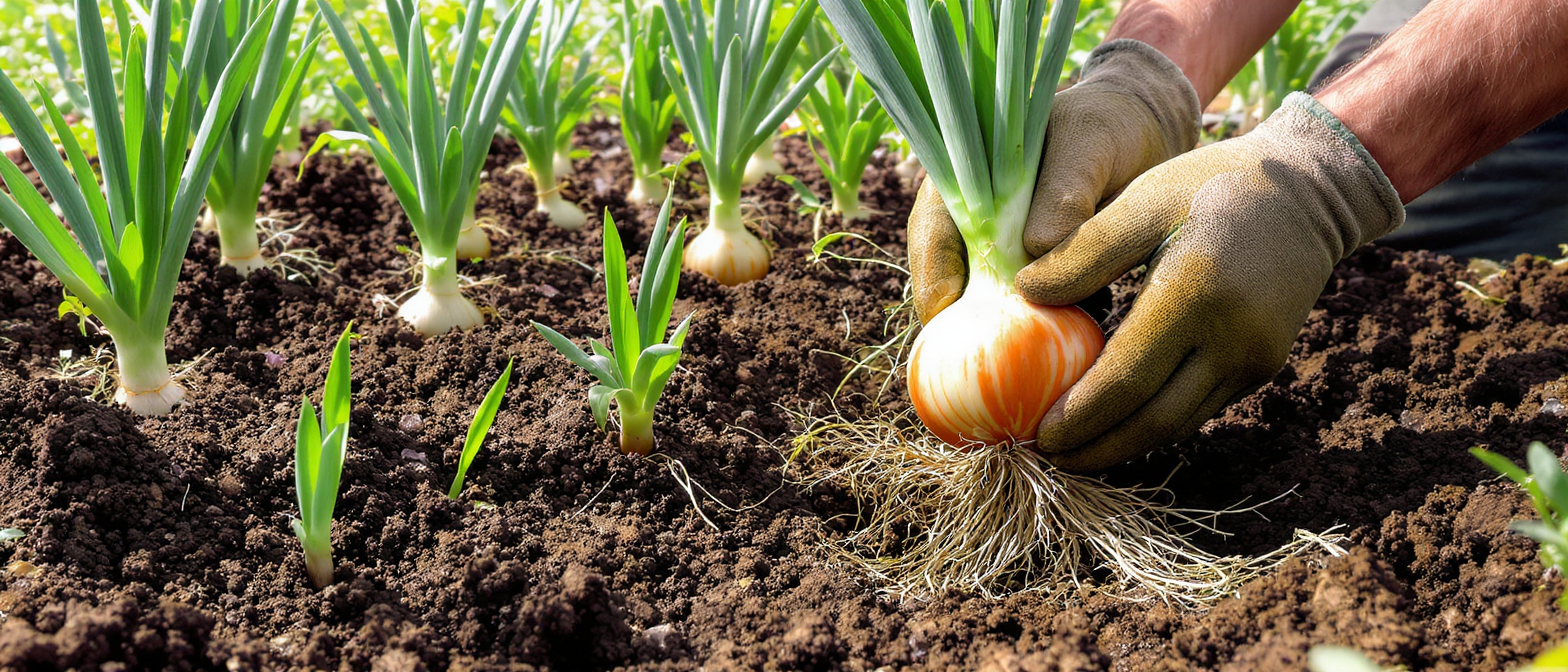
The life’s journey of an onion begins long before it appears in grocery stores—it starts with careful planting onions in well-prepared soil, where environmental factors interact with the plant’s natural tendencies to form the bulb. Whether using seeds, sets, or transplants, onion cultivation demands attention to detail, from soil quality to sunlight exposure. The bulb, which ultimately forms underground, is a storage vessel that sustains the plant and provides the characteristic flavors onions bring to countless dishes. Throughout the growing season, diligent onion care ensures that bulbs develop their full potential in size and taste.
When walking through a thriving onion garden, one can observe different stages of growth—from early sprouting to mature bulb formation—all influenced by factors such as day length, temperature, and moisture. Harvesting onions at the right moment is critical; waiting until the tops naturally fall and the bulbs have matured optimizes flavor and storage life. For many home gardeners, mastering these stages—from seed to harvest—is a rewarding journey that enhances self-sufficiency and brings fresh flavors to the table.
This guide offers a dynamic look at growing onions with enthusiasm, detailing each phase and providing practical advice grounded in traditional knowledge and modern best practices. The art of growing onions not only connects us to history but also empowers us with the skills to cultivate this essential crop efficiently and joyfully.
Essential points to remember:
- 🌱 Onion types: Choose varieties suited to your local day length and climate for the best bulb production.
- 🧅 Starting methods: Seeds offer variety, sets are beginner-friendly, and transplants balance speed and size.
- ☀️ Growing conditions: Onions thrive in loose, well-draining soil with ample sunlight and regular watering.
- 🛠️ Care requirements: Manage weeds, fertilize appropriately, and prevent bolting for harvested bulbs of high quality.
- 🌾 Harvest and storage: Harvest when tops fall over, cure onions thoroughly, and store in cool, dry, ventilated areas.
Understanding onion growth: types and suitable varieties for your garden
Onion growth is deeply influenced by the variety chosen and how it reacts to the daily length of sunlight—something gardeners must carefully consider for successful cultivation. There are three main categories of onions based on their photoperiodic behavior:
- 🌞Long-day onions: These onions require about 14-16 hours of daylight to start bulb formation. They flourish in northern climates where summer days are long, producing larger bulbs well-suited for storage.
- 🌤️Short-day onions: Triggered to form bulbs at 10-12 hours of daylight, these are ideal for southern regions. Because they form bulbs in shorter daylight conditions, their growing season often starts in cooler months.
- 🌥️Intermediate-day onions: Requiring 12-14 hours of daylight, these varieties adapt to middle latitudes and offer versatility in growth timing and bulb size.
The choice of onion type will influence planting schedules and expected harvest timing. For example, long-day varieties like ‘Walla Walla’ or ‘Yellow Sweet Spanish’ are perfect for areas with extended daylight, encouraging a healthy bulb enlargement phase. On the other hand, short-day species such as ‘Vidalia’ or ‘White Granex’ thrive in warmer southern zones with milder winters, allowing them to begin bulbing earlier.
Below is a table summarizing the key onion varieties paired with their ideal photoperiod and flavor profile:
| 🌿 Variety | ☀️ Day Length Category | 🍽️ Flavor & Use | 🏡 Best Region |
|---|---|---|---|
| Yellow Globe | Long-day | Strong, all-purpose cooking onion | Northern U.S., Canada |
| Vidalia | Short-day | Sweet, mild, great raw in salads | Southern U.S. Coastal |
| Red Wing | Intermediate-day | Mild, ideal for salads and sandwiches | Mid-latitudes |
| White Sweet Spanish | Long-day | Crisp, mild, commonly used in Mexican cuisine | Northern U.S. |
This knowledge empowers gardeners to match onion bulbs to their environment, increasing the likelihood of a bountiful onion harvest. The significance of day length cannot be overstated for healthy onion growth and the ultimate size of the harvested bulb. While flavor and culinary uses factor into selecting varieties, climate compatibility ensures that plants can develop properly from seed to harvest.
Planting onions: choosing the best method and preparing your soil
Planting onions can be approached in three primary ways: seeds, sets, or transplants—each method marked by its benefits and challenges. Selecting the right one for your garden depends on experience, time availability, and goals for the onion crop.
- 🌱 Seeds: Sowing onion seeds gives gardeners access to the widest array of varieties and allows development of large, storability bulbs. It requires patience, as germination and bulb formation take the longest.
- 🧅 Sets: Growing onions from small dormant bulbs is faster and easier, making this method perfect for beginners and those wanting quicker results, though sets often produce smaller bulbs.
- 🌿 Transplants: Starting with 8-10 week old seedlings offers a middle ground. Transplants yield bigger bulbs than sets and require less wait time than seeds, but they must be handled carefully to avoid transplant shock.
Soil preparation is vital for thriving onions. They demand loose, well-drained soil rich in organic matter with a slightly acidic to neutral pH of about 6.0 to 6.8. Integrating compost or aged manure before planting can boost nutrition.
Consider the following checklist for optimum soil readiness:
- Remove all weeds and debris to give onions unchallenged growth space.
- Amend soil with 2-3 inches of compost or well-rotted manure to enhance fertility and improve texture.
- For clay-heavy soils, incorporate sand or organic matter to improve drainage and aeration.
- Adjust soil pH with lime or sulfur based on test results to stay in the optimal range.
- Work the soil to a depth of at least 6-8 inches to allow robust root and bulb development.
Here is a comparative summary of planting methods outlining their relative strengths and weaknesses:
| 🌾 Planting Method | ✅ Pros | ⚠️ Cons |
|---|---|---|
| Seeds | Widest variety Better for large bulbs Less risk of bolting |
Slow germination Requires indoor start Higher initial care |
| Sets | Easy for beginners Faster harvesting Disease resistant |
Limited varieties Smaller bulbs More bolt-prone |
| Transplants | Good variety Intermediate growth time Better bulb size than sets |
Costlier Potential transplant shock Time-sensitive planting |
Essential onion care to ensure healthy bulb formation and a rich harvest
For optimal onion cultivation, consistent and attentive care throughout the growing season is crucial. From watering regimes to fertilization and pest management, each action plays a role in producing flavorful, robust onion bulbs.
Watering needs vary by growth stage. Early in development, onions require steady moisture to establish roots and develop tops. During the bulbing stage, a slight reduction in watering encourages the concentration of sugars within the bulb, enhancing flavor.
- 💧 Maintain about 1 inch of water per week, combining natural rainfall and irrigation.
- 🌾 Use drip irrigation where possible to keep leaves dry and minimize fungal disease.
- ⚠️ Stop watering 2-3 weeks before harvest to allow the bulbs to mature and the skins to dry.
Weeding is critical, especially early on when onions have shallow roots. Weeds compete fiercely for nutrients and moisture, which stunts onion growth. Mulching with straw or grass clippings suppresses weed growth while retaining soil moisture, providing a gentle protective cover.
- 🧹 Weed carefully to avoid damaging shallow roots.
- 🌿 Apply fresh mulch every few weeks as needed.
Fertilization is a fine balance. Onions are heavy feeders, needing plentiful nitrogen to support leafy growth initially but should have fertilization tapered off as bulbs form to avoid soft, weak bulbs.
- 🌱 Side-dress with nitrogen-rich fertilizer around 6 inches tall.
- ⚠️ Cease nitrogen inputs as bulb swelling begins to prevent soft necks.
Bolting prevention is vital. Flower stalks divert energy away from bulb development. Remove any emerging scapes promptly. Choosing bolt-resistant varieties and avoiding early planting in overly cold soils reduces this risk dramatically.
| 🔍 Growing Aspect | 💡 Recommendation | ⚠️ Common Issues |
|---|---|---|
| Watering | Regular, deep watering; drip irrigation preferred | Overwatering causes rot; underwatering limits bulb size |
| Weeding | Frequent, gentle weeding; mulch to prevent weeds | Competition for nutrients; root damage |
| Fertilization | Balanced nitrogen early; reduce late fertilization | Bulb splitting or thick necks if over-fertilized late |
| Bolting Control | Remove flower stalks; plant bolt-resistant varieties | Energy diverted from bulb growth; poor harvest |
Watching this detailed video can offer valuable insights into everyday onion care, showing techniques to maximize bulb size and quality throughout the season.
Timing, harvesting, and proper curing for a successful onion harvest
Successfully harvesting onions requires a sharp eye for maturity signs and an understanding of post-harvest care to guarantee long shelf life. Timing the onion harvest is an art rooted in observing the bulbs’ natural cues.
Onions are ready for harvest when approximately 75-80% of their tops have fallen over and turned yellow or brown. At this stage:
- 🌿 Necks of the bulbs become soft, signaling completed bulbing.
- 🍂 Foliage drying reduces moisture content, prepping the bulb for storage.
Harvesting in dry weather is preferred to avoid introducing excess moisture that could lead to rot in storage. Use a garden fork to gently loosen the soil without damaging onions and pull bulbs carefully by grasping the tops.
The next step is curing, which involves drying the onions in a well-ventilated, dry space out of direct sunlight. Curing allows the outer layers to harden and protects the bulb from diseases and decay.
- Lay onions on drying racks or hang them in mesh bags or braids for 2-3 weeks.
- Maintain temperature at 75-85°F (24-29°C) and humidity around 60-70% for optimal drying.
- Once dry, trim the roots short and cut tops to about 1 inch before storage.
Properly cured onions can last several months when stored in a cool, dry location with good airflow, such as a pantry or cellar at about 32-40°F (0-4°C).
| ⏳ Stage | 🔑 Key Indicator | 🛠️ Action |
|---|---|---|
| Harvest | 75-80% tops fallen; dry weather | Loosen soil; gently pull bulbs by tops |
| Curing | Dry, warm, ventilated environment | Air-dry for 2-3 weeks; hang or spread in single layers |
| Storage | Trimmed tops, dry bulbs | Store in cool, dry, dark place with good airflow |
This video expertly illustrates efficient harvesting techniques coupled with proper curing methods to maximize onion storage longevity and flavor retention.
Preventing common onion pests and diseases for healthy growth
Successful onion farming involves vigilance against pests and diseases that can hinder growth or ruin an entire crop. While good cultural practices form the first defense, knowing common threats and their remedies is invaluable.
Here are a few pests that may challenge your onion garden:
- 🦟 Onion Thrips: Cause silvery patches and twisted leaves; control with insecticidal soap and encouraging beneficial insects.
- 🐛 Onion Maggots: Larvae tunnel into bulbs causing wilting; prevent by crop rotation and row covers.
- 🕷️ Bulb Mites: Lead to stunted plants and rotting bulbs; avoid overly wet soils and practice crop rotation.
Common diseases include fungal infections like:
- 🍄 Downy Mildew: Purple fuzzy growth on leaves; improve air flow and avoid overhead watering.
- 🌫️ Neck Rot: Softening near the neck during storage; ensure thorough curing and dry harvest conditions.
- ❄️ White Rot: White fungal fluff; implement crop rotation and soil solarization methods.
| 🦠 Issue | 🔍 Symptoms | 🛡️ Prevention & Treatment |
|---|---|---|
| Onion Thrips | Silvery speckles on leaves, distorted growth | Mulch, insecticidal soap, introduce predatory insects |
| Onion Maggots | Plant yellowing, wilting, tunneling larvae in bulbs | Crop rotation, row covers, avoid replanting onions in same spot |
| Downy Mildew | Gray-purple fuzzy mold on leaves | Thin plants, improve airflow, fungicide treatment |
Addressing these problems early preserves the vitality of your onions and guarantees a richer, healthier onion harvest. Consistent monitoring, paired with preventive gardening techniques, will keep your onion garden flourishing season after season.
What is the best way to start onions for beginners?
Starting with onion sets is recommended for beginners due to ease and quicker harvest, while seeds and transplants provide larger bulbs but require more care.
How do day length requirements affect onion bulb development?
Onions form bulbs in response to specific daylight durations; matching the onion type to your region’s day length ensures proper bulbing and optimal size.
When is the ideal time to harvest onions?
Onions should be harvested when 75-80% of foliage has fallen and dried, indicating maturity, and preferably during dry weather to avoid post-harvest rot.
How should onions be cured and stored for long-term use?
Cure onions in a dry, ventilated environment at moderate temperature for 2-3 weeks before trimming and storing in a cool, dark, and well-ventilated space.
What common pests damage onion plants and how can they be controlled?
Pests like onion thrips and maggots damage bulbs and leaves; control measures include insecticidal soaps, row covers, crop rotation, and promoting beneficial insects.